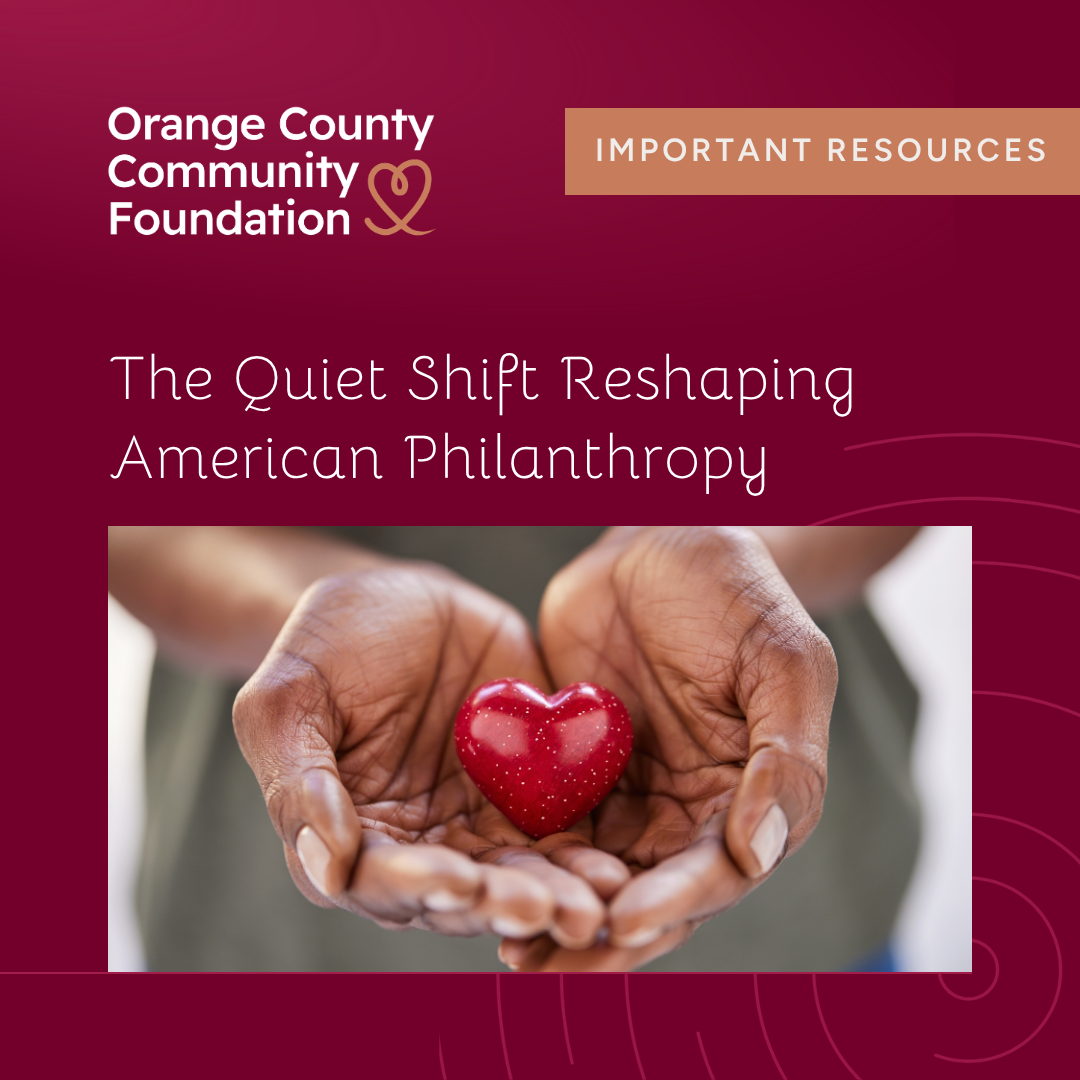
Giving in America is evolving – and one of the biggest shifts isn’t happening during donors’ lifetimes. The latest Giving USA report reveals that charitable bequests (gifts from estates) are among the fastest-growing sources of philanthropy, signaling a move toward more intentional, long-term giving. Our newest blog explores why legacy giving isn’t just for the ultra-wealthy, how the Great Wealth Transfer is reshaping philanthropy, and why the most meaningful gift you make may still be ahead of you. Read more and discover how thoughtful planning today can create a lasting impact for generations to come.
Giving in America is Evolving
Each year, the Giving USA report offers a snapshot of how Americans give. We often focus on the headline numbers – how much was donated, which sectors experienced growth, and how the economy influenced generosity.
But this year’s report revealed something much deeper.
One of the most significant trends didn’t focus on annual giving at all. It was about bequests.
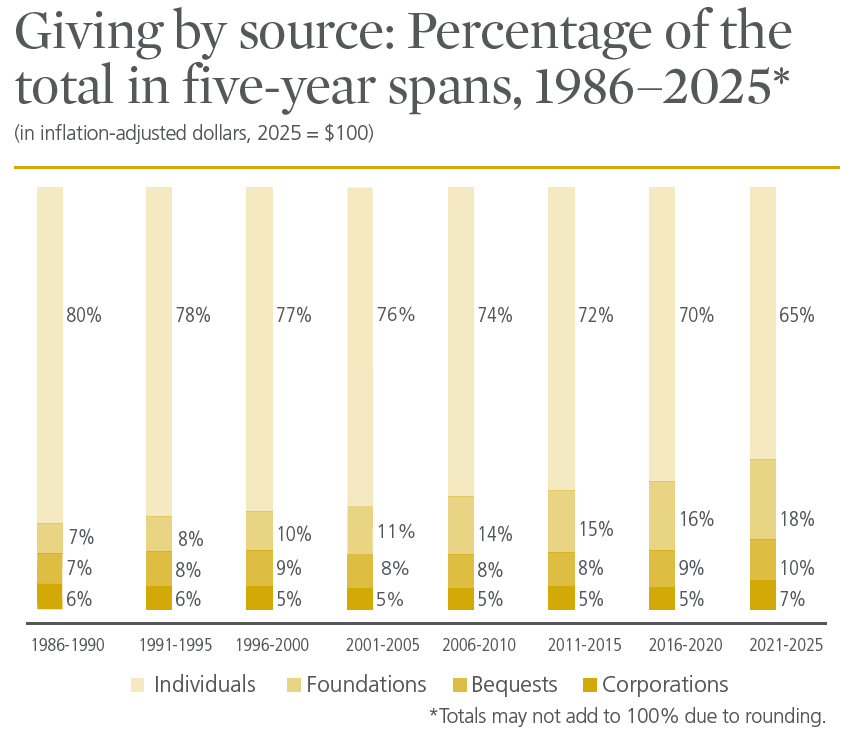
While individual giving continues to represent the largest share of charitable contributions in America, charitable bequests – gifts made through an estate (will or trust) – have emerged as one of the fastest-growing sources of philanthropy and accounted for 10% of all charitable giving in 2025 (an increase of 20% over 2024). At the same time, foundation giving has continued to grow, reflecting an evolution in how Americans choose to create impact.
Forty years ago, nearly 80% of charitable giving came directly from individuals. Today, that share is closer to two-thirds. This doesn’t mean Americans have become less generous. Rather, philanthropy itself has become more sophisticated. More donors are using charitable planning tools that allow them to maximize both their financial resources and their long-term impact.
It’s an important shift—and one that invites a different conversation.
Your Greatest Gift May Still Be Ahead of You
When people hear the phrase “estate planning,” they may first think about legal documents, minimizing taxes, or distributing assets among family members. But it’s essential to include the transformative potential of philanthropy as part of a well-crafted estate plan.
For many families, their most meaningful charitable gift will be the one they make after their lifetime.
That’s because a legacy gift allows people to care for the people they love first, while also creating a lasting impact on the causes and communities that have shaped their lives.
For some, that may mean establishing a scholarship that helps students for generations to come. For others, it may provide long-term support for environmental conservation, healthcare, the arts, faith communities, or organizations addressing our region’s most pressing needs.
The common thread isn’t wealth.
It’s intentionality.
Legacy Giving Isn’t Reserved for the Ultra-Wealthy
One of the biggest misconceptions about charitable estate planning is that it’s only for individuals with extraordinary wealth.
In reality, legacy giving is simply about making thoughtful decisions today that reflect the values you hope will continue tomorrow.
Whether someone chooses to leave a percentage of their estate, designate a retirement account beneficiary, establish an endowed charitable fund, or support a nonprofit they’ve loved for decades, each decision reflects something much larger than a financial transaction.
It reflects the priorities of a lifetime.
Increasingly, families are recognizing that wealth isn’t just something to transfer. It can be used to reflect their values and express the impact they want their life to have made.
The Great Wealth Transfer Is Also a Transfer of Values
Over the coming decades, $124 trillion will change hands as one generation passes wealth to the next.
Much has been written about the financial implications of this historic transfer. Equally important, however, is the opportunity to pass along deeply-held values.
Families are asking different questions than previous generations.
Not simply:
- “Who will receive my assets?”
But also:
- “What do I want my wealth to accomplish?”
- “What causes have shaped my life?”
- “How can my generosity continue after I’m gone?”
- “What kind of impact can I/we make in the communities I/we love most?”
These conversations often become some of the most meaningful discussions families have – not because they’re about money, but because they’re about purpose.
Philanthropy Has Become More Strategic
Today’s donors have more options than ever before.
Many are using donor-advised funds to organize their charitable giving during their lifetime and beyond. Others are incorporating charitable trusts, appreciated assets, or estate gifts into a broader financial plan.
The Giving USA data suggests that philanthropy is evolving beyond annual generosity toward intentional, long-term planning.
That doesn’t require giving more.
It requires giving with greater purpose, and finding the right partners to fulfill your charitable intentions.
When charitable planning becomes part of an overall financial and estate strategy, donors often discover they can create a greater impact than they ever imagined – while maximizing flexibility throughout their lifetime.
A Conversation Worth Having
At the Orange County Community Foundation, we have the privilege of working with individuals, families, and professional advisors to help transform charitable intentions into lasting community impact.
Whether you’ve already included charitable giving in your estate plan or are beginning to think about the lasting impact you would like to leave, we’d welcome the opportunity to have a conversation.
Our role isn’t to replace your attorney, CPA, or financial advisor. It’s to work alongside them, helping you explore charitable strategies that reflect your values, support the people and causes you care about, and maximize your long-term impact.
Some of the most meaningful philanthropic journeys begin not with a transaction, but with a conversation.
As the Giving USA report reminds us, America’s generosity continues to evolve. The question isn’t simply how much we’ll give during our lifetimes.
It’s what our generosity will continue to accomplish long after we’re gone.
If you’re beginning to think about your own philanthropic legacy or simply want to understand the options available, we invite you to connect with our team. We’d be honored to help you explore what’s possible.