

A term sheet shows up, and an entrepreneur’s life can change overnight.
After weeks or months of preliminary discussions with a strategic buyer or private equity investor, the arrival of the term sheet makes a transaction more realistic in the mind of the business owner. For many, this can be the most significant financial event they have faced, and they begin to imagine how this sale transaction may influence life for them and their family. Often, this includes the desire to have a meaningful philanthropic impact.

Proper planning prior to a transaction can reduce taxes and increase the amount available for charitable giving, but the opportunity is too often missed if the planning doesn’t start until a deal is in the works.
How Pre-Sale Business Philanthropy Minimizes Tax Liability
A business sale can yield life changing proceeds for a family, but it also creates significant federal and state tax liabilities. With appropriate planning, a meaningful portion of that tax bill can be minimized to achieve philanthropic goals. But that requires getting the order of operations right and having the plan in place before a deal is on the table.
Many entrepreneurs aren’t aware that a portion of the equity in their company can be donated to one or more nonprofits immediately prior to the business exit. As a result, donated equity is generally not taxed upon the sale of the transaction. And to increase the benefit, some or all of the value of that ownership interest donated may be eligible to be deducted from income in the year of the gift or in subsequent years.
But if planning starts after an owner has begun discussions with potential buyers, it can become one more point of negotiation in what is likely an already complex transaction. If, however, the structure is already in place when potential buyers do their initial due diligence, it is part of the existing landscape, and no material additional work is needed to obtain this benefit.
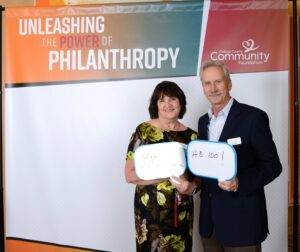 Greg Palmer has been on both sides of sale transactions and is a strong proponent of strategic philanthropy and the planning needed for it. He moved to California at age 39 to run publicly traded RemedyTemp and steered it to stellar success before its sale in 2006. That first payday left him with enough to change the course of his professional life.
He joined The Vistria Group, a Chicago private equity firm, as one of its founding partners involved in the acquisition and operation of multiple companies where he invested alongside the fund.
Palmer noticed something many investors and business owners miss: equity in these companies is among the most tax-efficient resources a person can give away, but only if the gift happens before a sale, not after.
A Counterintuitive Approach to Strategic Philanthropy
Most founders think about selling first, giving afterward. Palmer says that sequence must be flipped.
“Most people think about making charitable gifts after the transaction,” Palmer said. “They think ‘Soon I’m going to have a pile of cash. After the deal closes and the wire hits my bank account I can finally think about being philanthropic!’”
But you’re much more efficient from a tax perspective if you can do it before. He’s used that sequencing more than once now, gifting a slice of his ownership stakes in private companies ahead of exits and moving the resulting proceeds into a donor-advised fund at the Orange County Community Foundation. He plans to do it again as more of his private equity holdings mature.
“Reverse the order,” he said. Once a sale closes and the proceeds land as cash, the specific advantage tied to donating an ownership stake in that deal disappears with it.
Optimizing Ownership Structure for Business Philanthropy Examples
Timing is only half of the picture. The other half is whether the company’s ownership is set up to allow a charitable gift. A business tangled in a nest of LLCs needs much more advance work to pull off a pre-sale gift of ownership interests.
If the buyer wants those assets and isn’t comfortable with a charity holding a piece of the entity being acquired, even temporarily, the whole pre-sale gifting strategy may have to be shelved and the resulting post-sale gift reduced to a fraction of what an owner had hoped to give.
Private equity money is on the hunt right now, including for companies that wouldn’t have drawn attention a decade ago. When the call comes, a deal can go to signed paperwork in as few as 90 days. A charitable gift of business interests involves multiple steps, including a qualified appraisal, amended organizational documents, and a signed contribution agreement. Founders who pull this off are the ones who had the structure ready months, sometimes years, before an offer ever landed.
It’s the same advice that M&A attorneys typically give: Bring in counsel well before a likely sale, while there’s still time to clean up the ownership structure and operational issues to support an optimal sale.
Meaningful Giving and Family Wealth Philanthropy
After his first business exit, Palmer sketched out what he calls “a simple plan” for the next decade centered on his philanthropic goals. He gravitated toward causes close to what he already knew: HopeBuilders, a workforce-development nonprofit that trains and places disadvantaged adults into living-wage jobs, which aligns with his own background in staffing; and UCI Health, which lines up with the healthcare investments that now makes up a big part of his private equity work.
“I wanted to find things that I could relate to and make an impact in,” he said.
It’s not so different from how he sizes up an investment. His giving follows the same instinct as his deal-vetting: a few concentrated commitments to organizations he understands, rather than a scattering of gifts to every worthy cause that comes across his desk.
Getting Started with Family Philanthropy Before an Exit
It’s not too early to start planning, even if selling your business isn’t visible on the horizon.
“The sooner you can sit down with your wealth advisor, your estate planners, and come up with a plan, the better,” Palmer said. “As you’re gaining assets and growing, put together a plan for what your estate should look like, and think about philanthropy as a piece of it.
You don’t need to know exactly which causes yet. That’s the beauty of a donor-advised fund. You can put assets in and figure out where you go later. But get a plan.”
Owners/founders who spend years fine-tuning EBITDA, cleaning up cap tables, and rehearsing pitch decks before a sale can bring that same discipline to their charitable giving.
Regardless of the timing of a potential exit transaction, it doesn’t hurt to nail down philanthropic goals and get the business itself in order now. While the establishment of charitable vehicles and revision of the ownership structure can happen closer to the commencement of a sale process, there generally is no reason to wait on these steps either.
The critical element is that all of the steps are completed prior to the initiation of discussions with potential buyers so that a seller’s personal and philanthropic objectives become almost self-executing.